





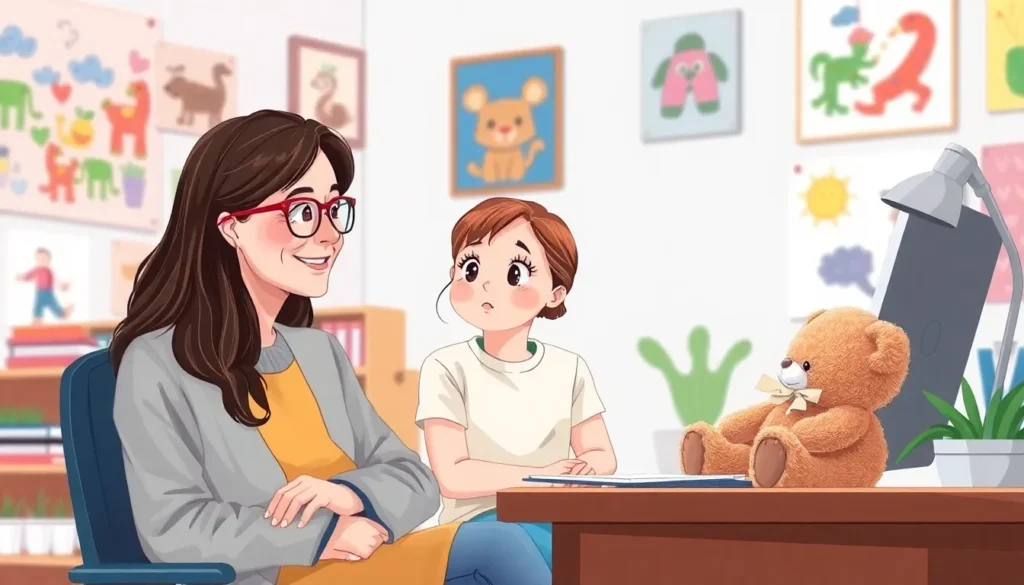

When it comes to kids, their minds can be as puzzling as a jigsaw puzzle with missing pieces. Children’s national psychiatry steps in like a superhero, swooping down to tackle the tricky mental health challenges that young ones face. From anxiety to ADHD, this field is all about understanding the unique emotional roller coasters kids ride every day.
Overview of Children’s National Psychiatry
Children’s national psychiatry focuses on diagnosing and treating mental health disorders in children and adolescents. This field addresses conditions like anxiety, ADHD, depression, and autism spectrum disorders. Experts utilize a multidisciplinary approach, integrating psychology, social work, and specialized medical care.
Treatment typically includes therapy, medication management, and family education. Therapists engage children through play therapy, cognitive behavioral therapy, and social skills training, tailoring methods to age and developmental stage. Medication, when deemed appropriate, serves to help manage symptoms and improve overall functioning.
Research plays a critical role in children’s national psychiatry. Ongoing studies analyze the effectiveness of various treatments, aiming for evidence-based practices that yield better outcomes. Organizations such as the American Academy of Child and Adolescent Psychiatry provide guidelines for clinicians, ensuring consistent and effective care.
Support from caregivers significantly impacts treatment success. Families are encouraged to participate actively in their children’s therapy, fostering open communication about emotions and behaviors. Schools often collaborate with mental health professionals to create supportive environments, promoting healthy development.
Children’s national psychiatry continues to evolve, adapting to new challenges and societal changes. Problems like bullying, social media influence, and academic pressure require innovative strategies. Practitioners must remain informed about the latest research and community resources to best support children in their mental health journeys.
Services Offered

Children’s national psychiatry provides a comprehensive range of services designed to address the unique mental health needs of children. These services focus on early intervention and holistic support.
Outpatient Services
Outpatient services play a crucial role in treating children with mental health disorders. These services typically include individual therapy, family therapy, and case management. Clinicians utilize evidence-based practices to help children develop coping strategies and improve emotional regulation. Psychoeducation for families is integral, as it equips parents with tools to support their child’s mental health effectively. Regular follow-ups and assessments ensure that treatment plans remain responsive to a child’s evolving needs. Access to community resources further enhances the support system.
Inpatient Services
Inpatient services provide intensive care for children facing severe mental health challenges. This setting offers a structured environment where children receive 24-hour psychiatric supervision. Multidisciplinary teams, including psychiatrists, psychologists, and social workers, work collaboratively to create personalized treatment plans. Family involvement remains critical during inpatient care, fostering communication and engagement. Therapeutic activities combined with medication management help stabilize children before transitioning to outpatient care. Such comprehensive support enables smoother reintegration into daily life and ongoing therapeutic processes.
Treatment Approaches
Children’s national psychiatry utilizes a variety of treatment approaches to address mental health needs comprehensively. The focus remains on individualized care that responds to each child’s unique circumstances.
Evidence-Based Practices
Evidence-based practices play a crucial role in children’s national psychiatry. These practices rely on research to determine the most effective treatment strategies for specific disorders. Techniques such as cognitive-behavioral therapy (CBT) have shown effectiveness for anxiety and depression, equipping children with tools to manage their emotions. Ongoing research informs practices, helping practitioners adapt to evolving challenges, such as those arising from social media or academic pressures. Integration of family education into treatment plans also enhances outcomes, empowering parents to support their children appropriately.
Therapeutic Modalities
Various therapeutic modalities address children’s mental health issues through a tailored approach. Individual therapy focuses on personal challenges, offering a safe space for children to express feelings. Group therapy allows children to connect with peers facing similar situations, fostering social skills and reducing feelings of isolation. Play therapy engages younger children through activities to enhance communication and emotional expression. For some situations, family therapy strengthens familial bonds and improves overall dynamics. Each modality emphasizes active participation from families to ensure a supportive environment during treatment.
Research and Advocacy
Research and advocacy play pivotal roles in children’s national psychiatry, enhancing understanding and treatment of children’s mental health challenges. Continuous efforts in these areas address vital questions and promote effective practices.
Current Research Initiatives
Current research initiatives focus on establishing evidence-based approaches to tackle mental health disorders in children. Studies examine the efficacy of therapies like cognitive-behavioral therapy (CBT) and explore how social factors impact children’s mental well-being. Researchers investigate the influence of technology on mental health, particularly concerning social media use and its correlation with anxiety and depression. Collaborative studies seek to integrate findings across disciplines, ensuring comprehensive treatment modalities evolve alongside the unique needs of children. By identifying early indicators of mental health issues, research aims to bolster early intervention strategies.
Community Outreach Programs
Community outreach programs serve as crucial extensions of children’s national psychiatry’s efforts. Initiatives provide educational resources to families, schools, and community organizations to raise awareness about mental health. Workshops focus on teaching coping strategies and resilience-building techniques for children and their caregivers. Collaborations with schools ensure that mental health professionals can directly support students and staff in fostering a positive environment. Local events and informational sessions create safe spaces for discussions about mental health challenges, ultimately aiming to reduce stigma. These programs empower families to advocate for their children’s mental health and enhance community support networks.
Children’s national psychiatry plays a critical role in navigating the intricate landscape of children’s mental health. By employing a multidisciplinary approach and emphasizing individualized care, it addresses the unique challenges that young people face today.
The focus on early intervention and family involvement not only supports children in their journey toward mental wellness but also empowers caregivers with the knowledge and tools they need. As the field continues to evolve, staying informed about research and community resources remains essential for fostering healthier environments for children.
Ultimately, a commitment to understanding and addressing mental health challenges can significantly enhance the lives of children and their families.